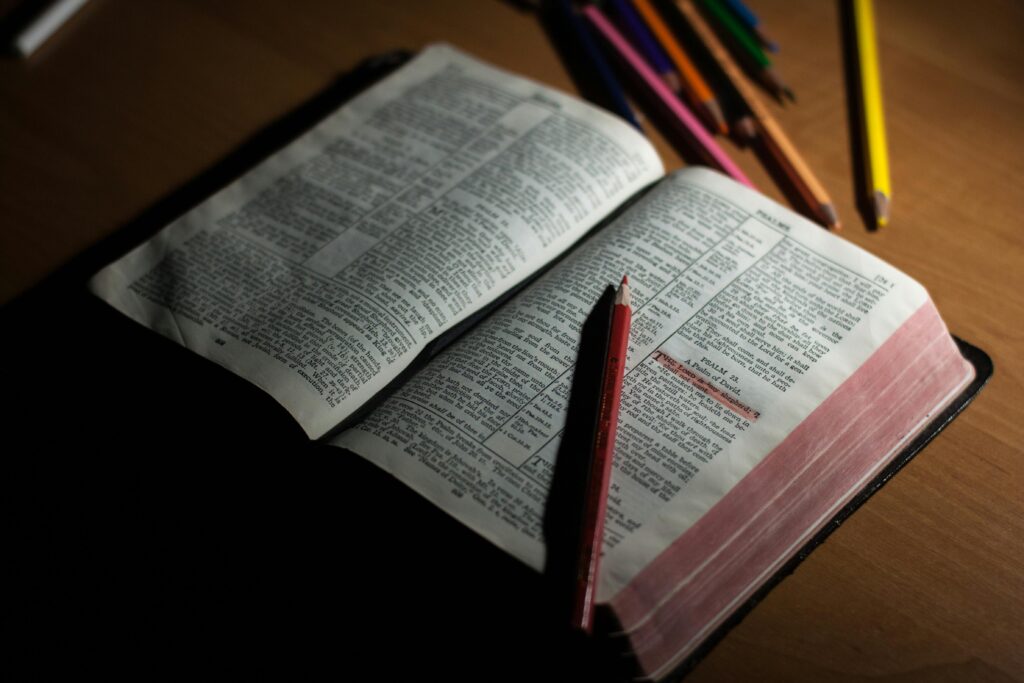
Explore how the Old Testament, New Testament, and the ancient Egyptian Book of the Dead each describe judgment, wickedness, and the fate of the condemned — with scripture, stories, and comparative insight.
When I lived in the South, or the deeper South, I heard a women tell a child “Now don’t be ugly”. This wasn’t physically ugliness. This is your heart and mind.
The opposite… a beautiful day with beautiful people. beautiful hearts, minds, and souls.
So what really is “being ugly”… lets take a look at some ancient stories that are trying to help us to be beautiful and go to heaven.
Every ancient tradition wrestles with the same haunting question: what happens to a person after death if their life was marked by cruelty, deceit, or rebellion against the sacred order? Long before modern moral philosophy, civilizations were already building elaborate systems of judgment — a heart weighed against a feather in Egypt, a soul standing before God in Israel, a final reckoning before the throne in the Gospels. Examining these traditions side by side doesn’t just satisfy curiosity about “hell.” It reveals something more interesting: a shared human intuition that actions carry eternal weight, and that certain behaviors — violence, deceit, oppression of the vulnerable, pride — are recognized across cultures as corrosive to both soul and society.
This post walks through what wickedness and damnation look like in the Old Testament, the New Testament, and the Egyptian Book of Going Forth by Day (commonly called the Book of the Dead) — with supporting verses, stories, and a look at where these traditions align and diverge.
Wickedness and Judgment in the Old Testament
The Old Testament rarely presents “hell” as a developed afterlife destination the way later Christian theology does. Its dominant concern is wickedness in this life — a Hebrew concept captured by the word rasha’ (רָשָׁע), meaning guilty, unrighteous, or opposed to right order. The wicked person is defined less by a single bad act and more by a settled posture against God and neighbor.
Psalm 1 captures this as a trajectory rather than an event: the wicked walk in a certain counsel, stand in a certain way, and sit in a certain seat — a slow drift rather than a single fall. Proverbs echoes this, describing the wicked as walking in darkness so deep they “do not know over what they stumble” — wickedness as a kind of self-inflicted blindness rather than mere rule-breaking.
The categories of wickedness recur throughout the Torah and the Prophets:
- Idolatry — worshiping other gods or images, explicitly forbidden in the Ten Commandments and repeatedly condemned by the prophets as spiritual adultery against God.
- Injustice and oppression — exploiting the poor, widows, orphans, and foreigners. The prophet Isaiah delivers some of the sharpest condemnations here, denouncing those who “justify the wicked for a bribe and deprive the innocent of their rights.”
- Violence and bloodshed — the flood narrative in Genesis describes the earth as “filled with violence,” which becomes the direct justification for the cataclysm that follows.
- Deceit — false witness, dishonest business scales, slander.
- Pride — repeatedly named in Proverbs as something God actively opposes.
Two stories illustrate divine judgment on wickedness vividly:
Sodom and Gomorrah (Genesis 18–19). The cities are destroyed for a combination of cruelty, sexual violence, and — according to Ezekiel 16:49 — pride, excess, and a refusal to “aid the poor and needy.” The destruction by fire and sulfur becomes, centuries later, one of the New Testament’s go-to images for final judgment (2 Peter 2:6, Jude 1:7).
Korah’s Rebellion (Numbers 16). Korah and his followers challenge Moses’ God-given authority, and the earth opens and swallows them alive. It’s a rare Old Testament image of the ground itself acting as an instrument of judgment — later readers saw in it an early echo of the grave, or Sheol, opening to receive the guilty.
Where the Old Testament does gesture toward an afterlife, it uses the term Sheol — often simply “the grave” or the shadowy realm of the dead, without the developed torment imagery that comes later. Psalm 9:17, in older translations, states that “the wicked shall be turned into hell” — but many modern translations render this more accurately as Sheol, the grave, underscoring how much theological content gets added by translation choices centuries later.
Damnation and Wickedness in the New Testament
The New Testament introduces a much more developed picture of final judgment, using three distinct terms often flattened into the single English word “hell”: Hades (the realm of the dead, roughly parallel to Sheol), Gehenna (a valley outside Jerusalem associated with fire and used by Jesus as a symbol of final punishment), and the Lake of Fire (introduced in Revelation as the ultimate destination of judgment).
Jesus speaks about Gehenna directly and often in stark terms. In the Sermon on the Mount, he links unresolved anger and contempt for others to “the fire of hell” (Matthew 5:22). In Mark 9:43–48, he repeats a warning three times — regarding hand, foot, and eye — that it is better to enter life maimed than to be thrown into Gehenna “where the fire never goes out.”
Several stories carry this theme:
The Rich Man and Lazarus (Luke 16:19–31). A wealthy man ignores a suffering beggar at his gate; after death, their positions reverse — Lazarus is comforted, while the rich man suffers in torment and begs for even a drop of water. The story is often read less as a literal geography lesson and more as an indictment of indifference to the poor, echoing the Old Testament’s concern for justice toward the vulnerable.
The Sheep and the Goats (Matthew 25:31–46). In this vision of final judgment, people are separated not by explicit religious profession but by how they treated “the least of these” — the hungry, the stranger, the imprisoned. Those who neglected them are sent to “eternal punishment.” It’s one of the most direct New Testament links between wickedness and social neglect rather than ritual violation.
Ananias and Sapphira (Acts 5:1–11). A married couple lies to the apostles about the proceeds of a land sale and both drop dead on the spot — an early church story often used to underscore how seriously deceit within the community of faith was regarded.
Judas Iscariot is described in the Gospels as betraying Jesus for silver and later dying by suicide, becoming, in Christian tradition, an archetype of betrayal and its consequences.
Paul’s letters expand the list of what leads to judgment beyond dramatic sins into everyday vice: Galatians 5:19–21 catalogs “works of the flesh” — sexual immorality, hatred, jealousy, rivalry, and drunkenness among them — and states plainly that those who persist in such patterns “will not inherit the kingdom of God.” Revelation 21:8 offers a similarly blunt list, naming cowardice, unbelief, murder, sexual immorality, sorcery, idolatry, and lying as leading to “the lake that burns with fire and sulfur.”
A key theological throughline in the New Testament is that judgment isn’t only about actions — it’s fundamentally about relationship to God through Christ. John 3:18 states that whoever does not believe is “condemned already,” tying damnation not just to behavior but to a decisive orientation of trust or rejection.
Judgment in the Egyptian Book of the Dead
Centuries before these Hebrew and Christian texts, Egyptian funerary tradition had already developed an intricate vision of postmortem judgment, preserved in Spell 125 of the Book of Going Forth by Day.
In this scene, the deceased enters the Hall of Two Truths, where the heart — regarded as the seat of conscience and moral memory — is placed on a scale against the feather of Maat, goddess of truth, balance, and cosmic order. The god Anubis oversees the weighing while Thoth records the result. If the heart is heavier than the feather, weighed down by wrongdoing, it is devoured by Ammit, a composite monster with the head of a crocodile, the body of a lion, and the hindquarters of a hippopotamus. This isn’t eternal torment in the biblical sense — it’s a “second death,” a complete annihilation of the soul’s chance at continued existence. If the heart balances evenly with the feather, the deceased is declared “true of voice” and granted entry into the Field of Reeds, a paradise mirroring earthly life at its most abundant.
Before the weighing, the deceased recites the 42 Negative Confessions before 42 divine judges, each representing a different Egyptian province. These are declarations of innocence — denials of specific wrongs — and they map remarkably well onto categories familiar from biblical wisdom literature:
- Denying murder, theft, and violence
- Denying adultery and sexual sin
- Denying lying, cheating with false scales, and falsifying records
- Denying cursing the gods or disrespecting sacred things
- Denying causing others hunger, pain, or grief
- Denying corrupt dealings, land fraud, and cheating the poor
- Denying being quarrelsome or a disturber of communal peace
That last category is distinctly Egyptian in flavor: because Maat represents cosmic and social harmony, disrupting peace itself is treated as a moral failing, not just an inconvenience.
Where the Traditions Converge — and Diverge
Set side by side, these three systems reveal a shared moral core: violence, deceit, sexual sin, oppression of the vulnerable, and pride are recognized across radically different cultures, centuries apart, with no direct literary dependence between Egypt and Israel’s wisdom tradition. That convergence is worth sitting with. Paul makes a strikingly similar observation in Romans 2:14–15, arguing that even those without the Mosaic law show “the work of the law written on their hearts,” their consciences bearing witness. Whether read theologically or simply as comparative anthropology, the overlap between Maat’s confessions and the biblical vice lists suggests something like a shared moral intuition running beneath very different cosmologies.
The traditions diverge sharply, however, on the nature of the penalty and the basis of judgment. Egyptian judgment ends in annihilation — the soul simply ceases. Much of the New Testament’s imagery points instead toward ongoing conscious separation or destruction, though Christian traditions themselves disagree on this point (more below). And where Egyptian judgment rests on a scale weighing lived deeds, New Testament judgment adds an additional axis entirely: relationship to Christ, not just conduct.
Three Questions Worth Sitting With
What’s the strongest case against this framing? The comparative approach used above risks flattening real differences for the sake of a tidy parallel. Scholars of comparative religion caution against assuming that surface-level similarity (violence is bad, lying is bad) proves a shared metaphysical reality rather than simply reflecting the basic practical requirements of any functioning society — you don’t need revelation to notice that murder and theft destabilize a community. Within Christian scholarship itself, there’s a live and serious debate about whether NT “hell” language depicts eternal conscious torment, annihilation (a view called conditionalism, with respected evangelical defenders), or ultimate restoration (Christian universalism, argued by some early church fathers like Origen and defended by modern theologians like David Bentley Hart). Presenting judgment as settled and monolithic across “the Bible” understates how contested this is even among believers.
What would someone more knowledgeable than either of us flag as missing? A historian of religion would likely point out that Sheol, Hades, and Gehenna each carried different connotations to their original audiences than “hell” carries to a modern reader, and that retrojecting later, fully developed doctrines of eternal torment back onto earlier OT texts is a common but anachronistic move. They’d also note that Egyptian religion evolved over three millennia — Spell 125 reflects New Kingdom theology, not a static, unchanging Egyptian belief.
Blind spots to watch for: The comparative framing here is chosen partly because it makes compelling content — parallels are narratively satisfying. That’s worth naming honestly. There’s a risk of over-claiming universality from a small, cherry-picked set of parallels while underplaying the traditions’ very different views of God’s character, the possibility of repentance, and what ultimately grounds moral obligation. Any teaching built on this material serves readers better if it acknowledges the internal Christian debate on the nature of hell rather than presenting one view as the uncontested consensus.
So what do I think? Ma’at says a soul can just end. Ma’at has a lot more experience and has been around a while.
Ancient Egypt was very serious about going forth. The book was available to everyone. Learn it, know it. There is a cost to pay for the book.
You are eliminating your own false beliefs and limitations. At the same time, you want to create a better future for all… because you will be born again… and you want a better life.
Sources for further study: Genesis 6, 18–19; Numbers 16; Psalms 1, 9; Proverbs 4, 16; Isaiah 1; Ezekiel 16; Matthew 5, 7, 25; Mark 9; Luke 16; John 3; Romans 2, 6; Galatians 5; 2 Thessalonians 1; Revelation 20–21; Acts 5; and E.A. Wallis Budge’s translation of the Egyptian Book of the Dead, Spell 125.